

#Parenting #CoParenting
Back to School: 6 Things to Review in Your Parenting Plan Every Year
By Tracy Ann Moore-Grant
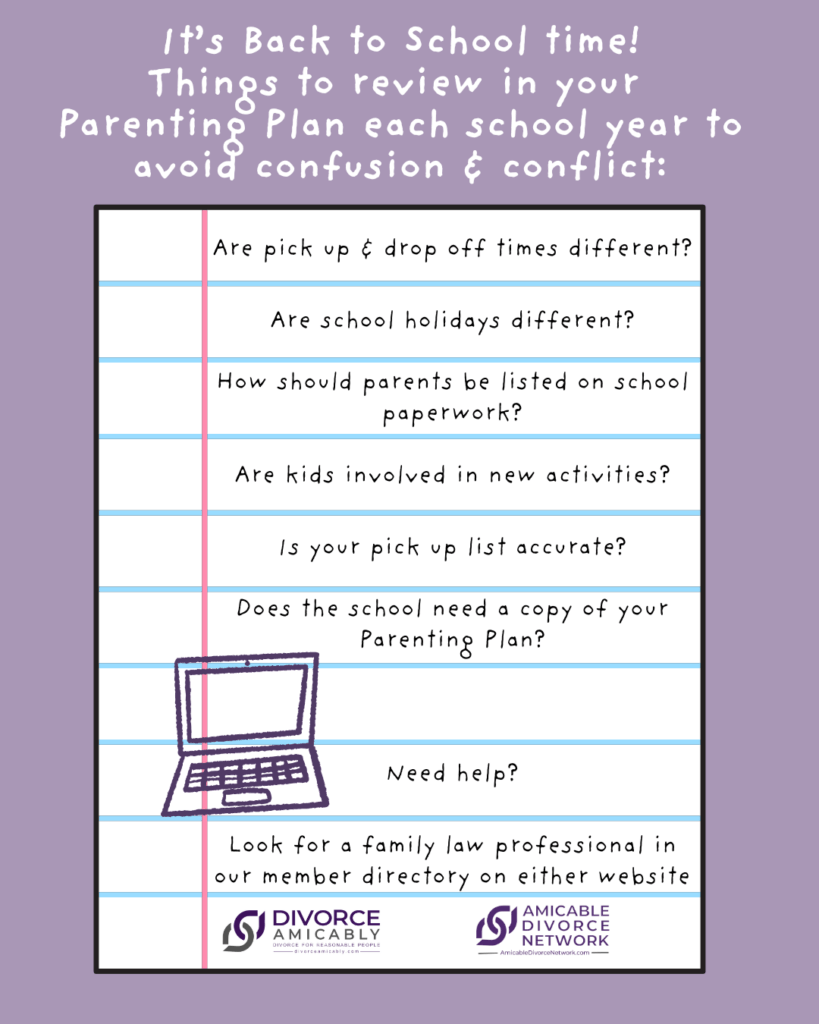
Back to school season is one of the biggest transition points of the year for co-parenting families. New schedules, new teachers, new activities — and often, a parenting plan that hasn't been looked at since it was signed.
The good news? A quick annual review can prevent the kind of small miscommunications that turn into big conflicts. Before the first bell rings, take a few minutes to walk through your parenting plan with these six questions in mind.
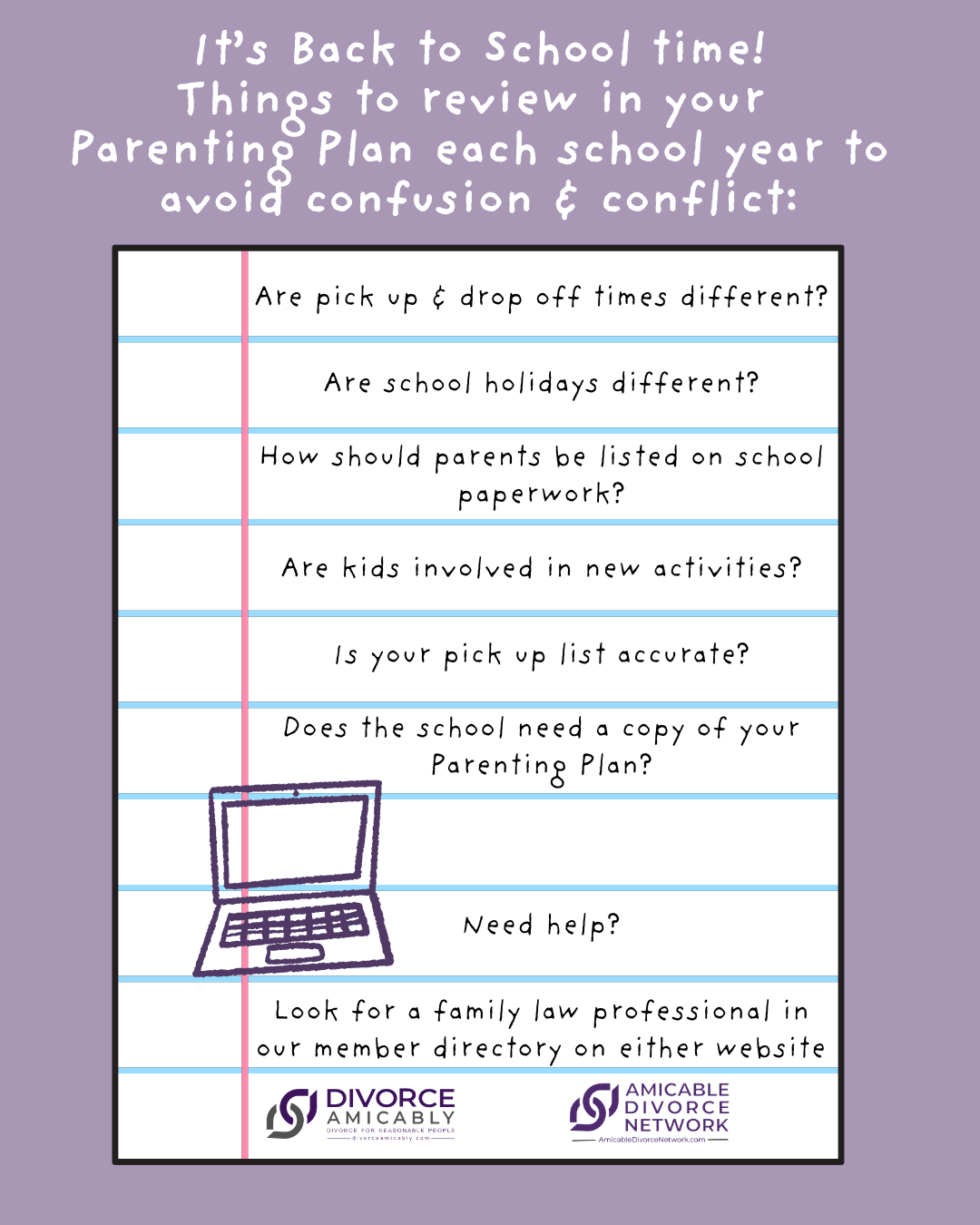
1. Are Pick Up & Drop Off Times Different This Year?
A new school often means a new schedule — and that can throw off pick up and drop off logistics that used to work fine. Check your plan against the new school day start and end times, and make sure both parents are on the same page about who's responsible for which days.
2. Are School Holidays Different?
Not all schools follow the same calendar. If your child is starting at a new school, or if the district has updated its calendar, compare it to the holiday and break schedule in your parenting plan. Fall break, teacher workdays, and early release days are common sources of confusion if they're not addressed clearly.
3. How Should Parents Be Listed on School Paperwork?
Enrollment forms, emergency contact cards, and pick-up authorization lists all ask how parents should be listed. Confirm both parents are included correctly and consistently, and that the school has accurate, up-to-date contact information for each of you.
4. Are the Kids Involved in New Activities?
Sports, clubs, and after-school programs can add complexity to a custody schedule that didn't account for them. If your child is starting a new activity this year, talk through how it affects pick up, drop off, and time-sharing — before the season starts, not after a conflict comes up.
5. Is Your Pick Up List Accurate?
Pick up lists tend to get outdated. A grandparent who's no longer available, a babysitter who's moved on, or a new caregiver who needs to be added — take a moment to make sure the list on file with the school actually reflects who's authorized to pick up your child today.
6. Does the School Need a Copy of Your Parenting Plan?
Some schools ask for a copy of the parenting plan (or custody order) on file, especially if there are specific provisions about decision-making, notifications, or restrictions. If your child is new to a school, check whether they require this documentation and make sure it's submitted before the year gets underway.
A Few Minutes Now Saves a Lot of Stress Later
None of these questions require a court filing or a complicated conversation — most of the time, they just require a few minutes of attention before the school year starts. But skipping them is exactly how small misunderstandings turn into avoidable conflict down the road.
If your review turns up something that does need to change — a schedule that no longer works, a plan that needs modifying, or a conversation that needs a neutral third party — you don't have to navigate it alone.
Find a vetted family law professional in our membership directory who can help you make sense of your options, update your parenting plan, or work through the conversation with your co-parent.
The Amicable Divorce Network connects families with vetted attorneys, mediators, and other professionals committed to resolving family law matters with less conflict and more control. Learn more about Divorce for Reasonable People™ at AmicableDivorceNetwork.com.
Recent Posts







From the Book: Divorce Amicably
Chapter 6. Fault: Do You Bring It Up?
When approaching divorce, usually one spouse believes – and may even have significant evidence – that the other spouse is “at fault” for the end of the marriage. The aggrieved spouse often wants the other to “pay” for their behavior – either financially or through the custodial schedule. That means they will want to pursue fault grounds.
When deciding the direction of your divorce, it is important for you to understand the difference between fault and no-fault divorce.