
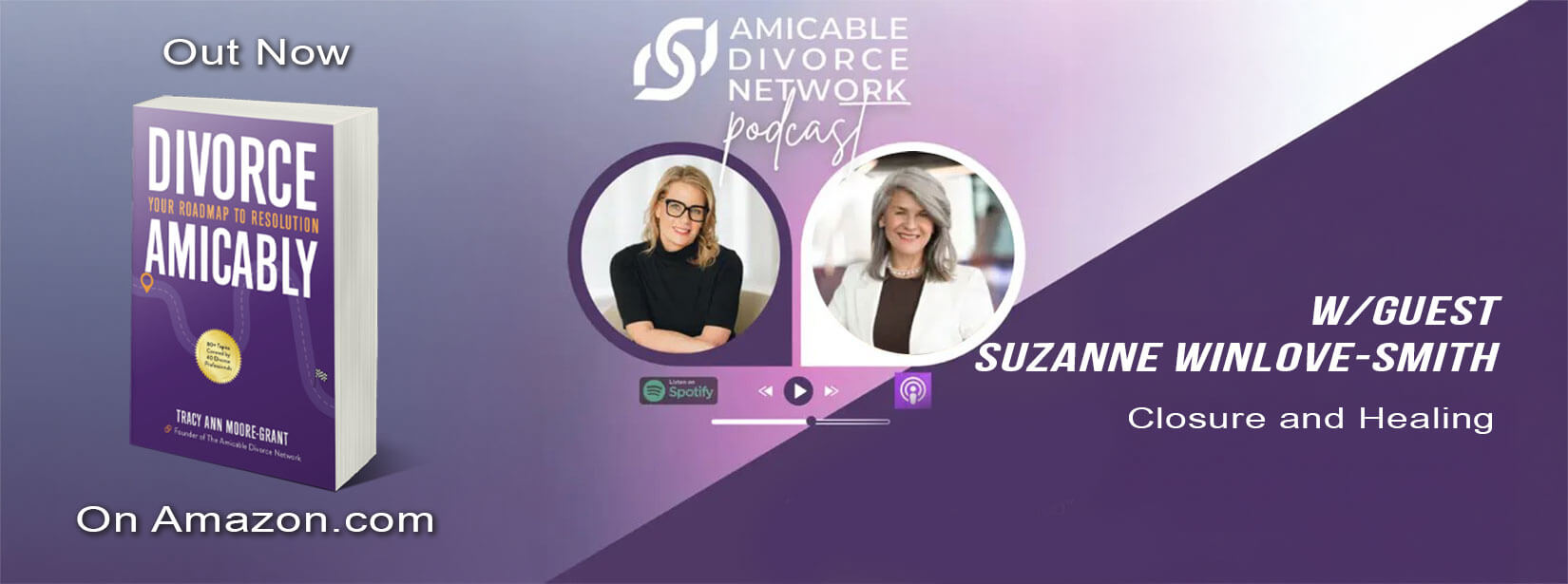
Suzanne Winlove-Smith: Closure and Healing
Divorce does not end the moment the paperwork is signed. For many people, the legal conclusion is only one part of the process. The emotional work of closure, healing, and rebuilding a new identity often continues long after the formal divorce is complete. In this episode of the Amicable Divorce Network Podcast, host Tracy Moore-Grant speaks with Suzanne Winlove-Smith about the final chapter of the Divorce Amicably book and what it means to truly move forward after divorce.
The Emotional Trauma of Divorce
Divorce can bring grief, fear, anger, confusion, and a deep sense of loss. Even when the decision is necessary, the experience can still feel traumatic. A marriage often becomes part of a person’s identity, daily routine, future plans, and sense of family. When that structure changes, it can leave people wondering who they are outside of the relationship.
Suzanne discusses the importance of recognizing the emotional impact of divorce rather than minimizing it. Healing begins when people allow themselves to acknowledge what they have been through. Seeking help is not a sign of weakness. It is often one of the most important steps toward stability, clarity, and emotional recovery.
Moving From Shared Identity to Individual Identity
One of the most difficult transitions after divorce is moving from a shared identity to an individual one. A person may be used to thinking in terms of “we,” making decisions as part of a couple, or defining the future around the marriage. After divorce, that identity has to be reshaped.
This transition can feel unsettling, but it can also become a turning point. Healing after divorce involves rediscovering personal values, needs, goals, and strengths. It is not simply about leaving the past behind. It is about learning how to carry the lessons of the past while building a healthier and more grounded future.
Managing Emotional Triggers
Even after a divorce is final, emotional triggers can appear unexpectedly. A conversation with an ex-spouse, a holiday, a parenting exchange, a financial issue, or a memory connected to the marriage can bring old pain back to the surface. These moments can make people feel as if they are moving backward, even when they have made real progress.
Suzanne shares the importance of learning how to recognize and manage those triggers. Instead of reacting from pain, people can begin to pause, reflect, and choose a healthier response. This kind of emotional awareness is especially important for parents, because children often learn how to handle stress and conflict by watching the adults around them.
Transforming Pain Into Positive Action
Healing does not mean pretending the divorce did not hurt. It means finding constructive ways to move through that pain. Suzanne discusses the value of transforming negative energy into positive action. That may include journaling, seeking professional support, creating new routines, setting goals, reconnecting with personal interests, or taking steps toward a more stable future.
This process can help people regain a sense of agency. Divorce can make life feel out of control, but small, intentional actions can help rebuild confidence. Over time, those actions become part of a new chapter rooted in strength rather than survival.
Planning for the Future
Closure is not only about understanding the past. It is also about preparing for what comes next. After divorce, people may need to rethink their emotional life, parenting approach, finances, home environment, friendships, and long-term goals. Having support during this stage can make the future feel less overwhelming.
Suzanne’s message is one of empowerment. Divorce may mark the end of one chapter, but it can also become the beginning of a more grounded, self-aware, and intentional life. With support, reflection, and practical tools, healing is possible.
Suzanne Winlove-Smith is based in Canada and works internationally. To learn more, visit thecleandivorce.com. A free consultation is available on her website, along with her Divorce Journal, a step-by-step tool designed to help process pain and support healing after divorce.
Recent Posts





From the Book: Divorce Amicably
Chapter 6. Fault: Do You Bring It Up?
When approaching divorce, usually one spouse believes – and may even have significant evidence – that the other spouse is “at fault” for the end of the marriage. The aggrieved spouse often wants the other to “pay” for their behavior – either financially or through the custodial schedule. That means they will want to pursue fault grounds.
When deciding the direction of your divorce, it is important for you to understand the difference between fault and no-fault divorce.