
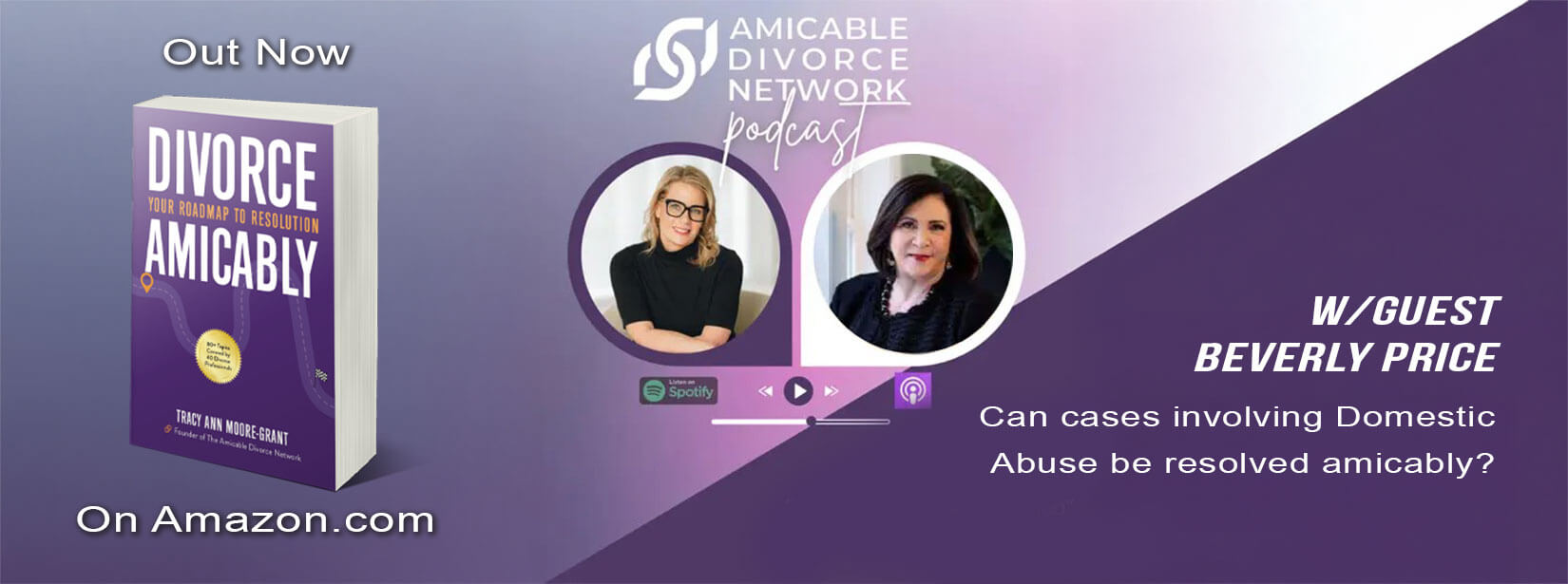
Can Cases Involving Domestic Abuse Be Resolved Amicably? w/Beverly Price
Divorce is difficult under any circumstances, but when domestic abuse is involved, the process becomes far more sensitive and complex. Safety, emotional support, legal protection, and professional guidance all become essential. In this episode of the Amicable Divorce Network Podcast, Beverly Price, certified divorce coach and founder of the Divorce Coalition, discusses domestic violence in divorce and what abuse survivors need when trying to move forward.
Understanding the Complexity of Domestic Abuse in Divorce
An amicable divorce process is often associated with cooperation, communication, and reduced conflict. But in cases involving domestic abuse, those ideas must be approached carefully. Abuse can create fear, control, manipulation, financial dependency, and emotional trauma. Survivors may not feel safe negotiating directly or participating in a process that assumes both parties have equal power.
That does not mean survivors should be denied access to a better divorce process. It means the process must be designed with safety, support, and reality in mind. Beverly’s message highlights the importance of creating divorce options that do not simply push people through the system, but help them make informed decisions while protecting their well-being.
Not Just Surviving Divorce
Beverly shares her own story and emphasizes that the goal should not be merely surviving divorce. For abuse survivors, getting out of the relationship may be only the first step. The divorce process itself can become another source of stress, fear, and emotional harm if the right protections and professionals are not in place.
A better process recognizes the full experience of the survivor. This includes the emotional trauma of the relationship, the practical challenges of separation, and the need for trusted guidance. Divorce professionals who understand abuse dynamics can help survivors avoid unnecessary conflict, protect themselves, and begin rebuilding their lives.
Why Support Matters
One of the most important themes in this episode is the need for a supportive and informed professional environment. Abuse survivors should not have to explain or prove the impact of abuse to professionals who do not understand it. They need people who can listen carefully, recognize warning signs, and help create a path forward that prioritizes safety and dignity.
This may include divorce coaches, attorneys, therapists, financial professionals, and other specialists who understand the realities of domestic violence. The right support system can help survivors feel less isolated and more prepared to make decisions during a deeply stressful time.
Improving the Divorce Experience for Abuse Survivors
Through the Divorce Coalition, Beverly is working to create a more supportive and understanding environment for people seeking to break free from abusive relationships. This kind of work is important because the traditional divorce process can sometimes intensify conflict or leave survivors feeling overwhelmed.
Improving the divorce experience does not mean pretending abuse did not happen. It means recognizing that survivors deserve a process that is safer, more informed, and more compassionate. When professionals understand the dynamics of domestic abuse, they can help create better outcomes and reduce additional harm.
A Safer Path Forward
Cases involving domestic abuse require care, structure, and the right professional support. While every situation is different, Beverly’s conversation reminds listeners that survivors deserve more than a difficult legal process. They deserve guidance, protection, and a path that helps them move toward stability.
The question is not whether every domestic abuse case can follow a traditional amicable model. The better question is how divorce professionals can build safer, more supportive processes for survivors who need help leaving abusive relationships and beginning again.
To hear more conversations about navigating separation and divorce with less controversy, follow the Amicable Divorce Network Podcast on Apple Podcasts.
Recent Posts







From the Book: Divorce Amicably
Chapter 6. Fault: Do You Bring It Up?
When approaching divorce, usually one spouse believes – and may even have significant evidence – that the other spouse is “at fault” for the end of the marriage. The aggrieved spouse often wants the other to “pay” for their behavior – either financially or through the custodial schedule. That means they will want to pursue fault grounds.
When deciding the direction of your divorce, it is important for you to understand the difference between fault and no-fault divorce.